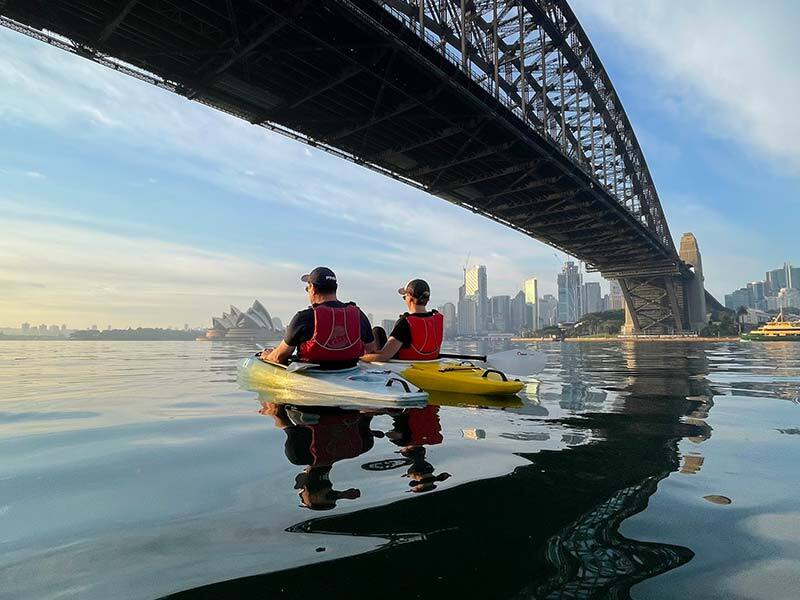
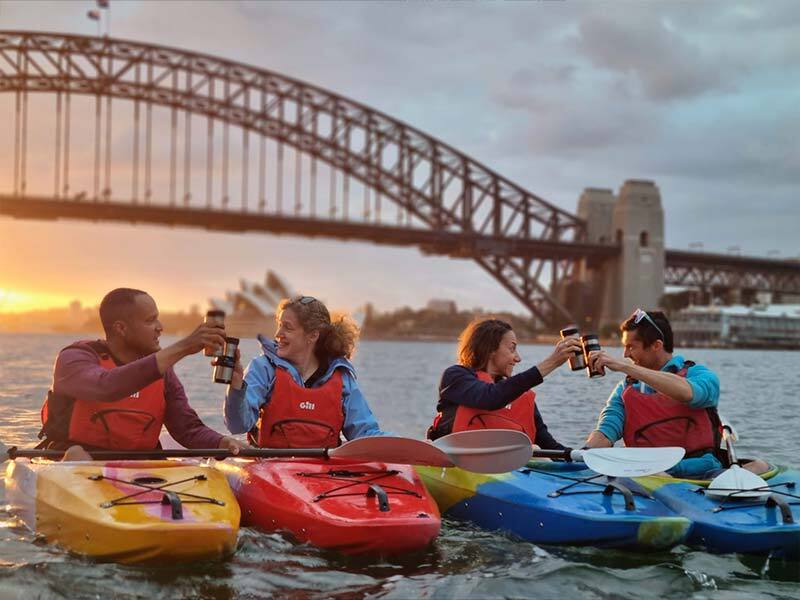
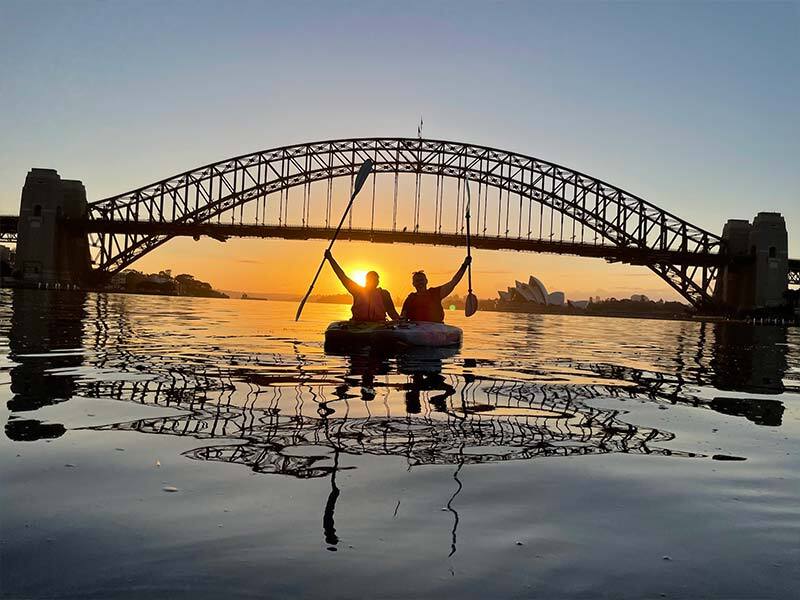
Everyone is Welcome on Sydney Harbour
Accessible kayaking. Inclusive experiences. Real people.
It Starts with people
At Sydney By Kayak, we've never believed accessibility starts with equipment. We believe it starts with people.
For more than thirteen years, we've welcomed tens of thousands of paddlers onto Sydney Harbour.
Every person arrives with their own story and their own questions. Some need a little more support. Some need a little more time. Others simply need someone to believe in them before they believe in themselves.
We don't start by looking for reasons something won't work. We start by asking one simple question: "Is there a safe way to make this happen?" More often than not, the answer is yes.
Over the years, we've added adaptive equipment, redesigned our Eco Hub, built a custom outrigger kayak and created step-free spaces. But the biggest lesson hasn't come from the equipment we've bought or the spaces we've built. It's come from the people we've met.
Our kayaks help too. Designed for comfort and stability, they are perfect for long-legged, new or nervous paddlers. With a double-sized cockpit opening and a bulkhead for safety, they are almost impossible to capsize.
If you're wondering whether kayaking with us might be possible, we'd love to hear from you. You don't need to have all the answers before you get in touch. We'll work through them together.
A totally different way to experience Sydney Harbour
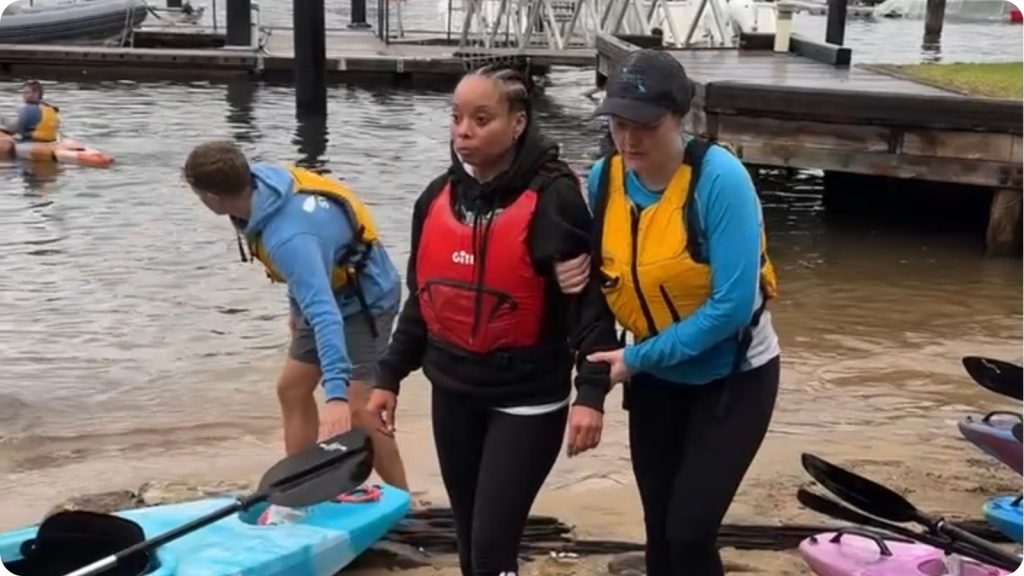
One morning, we had the privilege of taking a legally blind woman kayaking on Sydney Harbour. She couldn't see the Harbour Bridge towering above the harbour or the sunrise reflecting across the water. Instead, she experienced the harbour in a completely different way.
Throughout the tour, our Head Guide, Laura, described everything around her. The changing colours of the sky as dawn broke. The shape of the Harbour Bridge from across the water. The ferries beginning their morning commute. The birds calling from the foreshore. The history of Sydney Harbour, the stories behind the landmarks, and the marine life living beneath our kayaks.
At times, Laura gently towed her kayak so she could stop paddling, listen to the water and simply enjoy the sounds of the harbour. While moving between the group to take photographs, Laura always returned to paddle alongside her, check in, answer questions and continue painting a picture of everything happening around her.
At the end of the tour, she told us it had been one of the most beautiful experiences of her life. She'd always wanted to experience Sydney Harbour, and it was now a beautiful memory for her.
It was a reminder that accessibility isn't always about specialised equipment. Sometimes it's about taking the time to understand what someone needs and finding a different way for them to experience the same place.
The man who reminded us why we always try to say yes
Before booking, one of our paddlers got in touch to explain that he had recently injured his shoulder. His arm was in a sling, and he wouldn't be able to paddle. Rather than saying no, we asked ourselves how we could make it work.
On the day of the tour, our Head Guide, Laura, joined the paddle as an additional guide so she could tow him for the entire experience. It meant he could simply relax, enjoy being out on the harbour and take in the morning without worrying about keeping up with the group.
What none of us expected was just how much he would give back. As Laura towed his kayak across the harbour, he shared stories from his own life with such warmth, humour and optimism that before long, the whole group was captivated. In many ways, everyone was listening to him more than they were listening to the history of Sydney Harbour.
It was one of those mornings that reminded us why we always try to find a way to say yes. Accessibility isn't always about specialised equipment or modified experiences. Sometimes it's simply about making a small adjustment that allows someone to be part of something they thought they might have to miss.
We were grateful he trusted us enough to ask. We're even more grateful that we said yes.

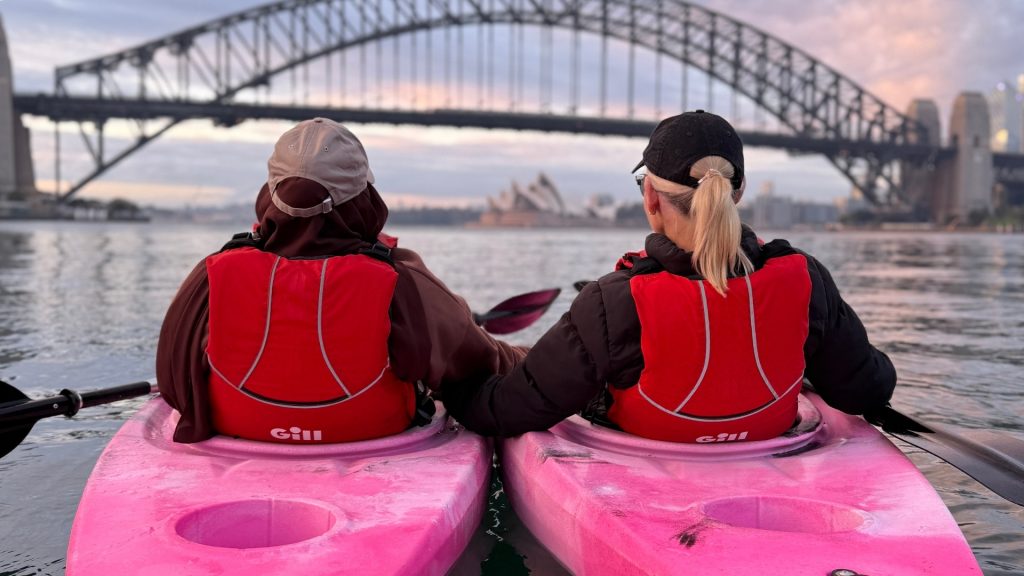
The woman who almost didn't attend
In the days leading up to her tour, one of our paddlers wasn't sure whether she could do it. She told us she was feeling anxious. Not just about kayaking, but about meeting new people, keeping up with the group and not knowing what to expect.
The night before her tour, she reached out with a few more questions. We replied as quickly and empathetically as we could, talking her through exactly what the morning would look like. Where to park. Where we'd meet. What it feels like to sit in a kayak for the first time. We reassured her that there was no pressure, no expectations, and that if she wanted to return to shore at any point, we would simply head back together.
The next morning, she arrived. Within minutes, the nervousness began to melt away. By the end of the tour, she was laughing, chatting with the rest of the group and soaking up the beauty of Sydney Harbour.
Sometimes accessibility isn't about equipment at all. Sometimes it's about taking the time to answer a few extra questions, listening without judgement and helping someone feel comfortable enough to take that first step.
We're so glad she did.
The role that didn't exist until we created it
Not every accessibility story at Sydney By Kayak happens on the water.
Last summer, we met a young man with a hidden disability who was looking for work. Rather than focusing on what he might find difficult, we looked at what he could do well. Together, we created a role that suited his strengths. He became our Beachy, welcoming paddlers as they arrived, helping carry kayaks to and from the beach, assisting people as they stepped in and out of their kayaks, and making everyone feel at ease before and after their tour.
He quickly became a valued member of our team. Over the summer, his confidence grew, he built new skills and gained experience working with the public. When it was time for him to move on, we were proud to provide a reference that helped him secure an apprenticeship as a mechanic.
Accessibility isn't just about creating inclusive experiences for our visitors. It's also about recognising potential, making reasonable adjustments where needed and giving people the opportunity to grow.


The 86-year-old and her granddaughter
Sydney had lived in Sydney her whole life. She had never been on the harbour in a kayak.
Her granddaughter helped her into the kayak on the beach and paddled beside her for the whole tour. They talked the way grandmothers and granddaughters talk when they have nowhere to be and something beautiful to look at.
At the end, she said it was the best thing she had ever done in Sydney. We think about her often.
The call she thought would cancel her tour
The day before one of our Kayak and Ice Cream Tours, we were reviewing our paddlers' questionnaires when we noticed that one guest had listed a severe nut allergy. We gave her a call. She later told us her heart sank when she saw our number appear on her phone. She was convinced we were calling to tell her she wouldn't be able to join the tour.
Instead, we asked a simple question. "How can we make this work safely for you?"
Together, we talked through exactly what she was comfortable eating, what precautions she normally took and what we needed to know in an emergency. Before the tour, we purchased a specific ice cream that she knew was safe and stored it separately. We thoroughly sanitised and boiled her bamboo bowl, spoon and serving equipment before keeping them separate from everything else. We briefed our team and made sure we knew where her EpiPen was.
Thankfully, none of those plans were needed. She was able to relax, enjoy the experience with everyone else and simply focus on spending a beautiful morning on Sydney Harbour.
For us, accessibility also means creating experiences where people with medical conditions feel welcomed, listened to and included, rather than worrying they'll be turned away.

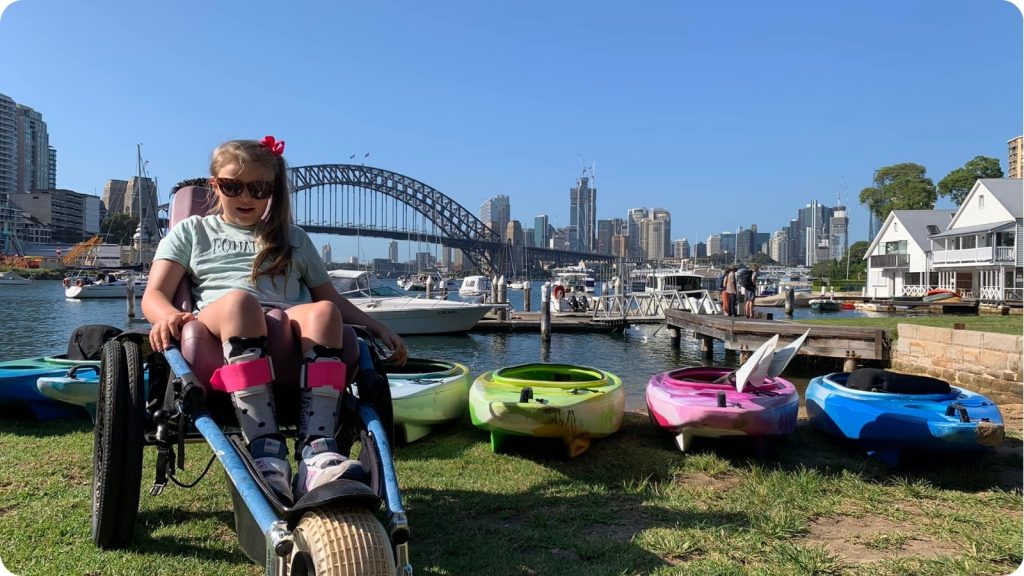
A wish that brought our community together
In 2021, our daughter Isla was still a baby. One night, while feeding her at around 2am, Laura came across the story of a young girl named Tiery. She was about the same age as our son Levi and had gone in for what should have been a routine operation. Tragically, complications left her paralysed.
That morning, Laura reached out with a simple idea: let's run a special kayak tour and donate the proceeds towards Tiery's medical treatment. Our community responded with incredible generosity.
On the day of the fundraiser, we wanted Tiery to experience the harbour in whatever way she could. We carefully sat her in one of our kayaks on the shoreline and gently walked her through the shallows so she could feel the cool water around her, the movement of the kayak and the sand beneath her.
It was a small moment, but one that has stayed with us ever since. That experience reminded us that accessibility isn't always about finding a way onto the water. Sometimes it's about meeting someone where they are and making sure they still get to be part of the experience.
It started with one simple question - "Why not?"
We didn't set out to become an accessible tourism business. When we launched Sydney By Kayak back in 2013, we simply wanted to share the harbour we loved: to help visitors see Sydney from the water, paddle beneath the Harbour Bridge, discover hidden bays and leave feeling more connected to this incredible place.
Then, as we grew, more and more situations arose that required us to think and say, "Why not?" Not, "No, that's too hard." Not, "We don't do that." Just, "Let's work out if there's a safe way to make it happen."
Over the years, more people reached out. Someone recovering from surgery. A paddler who only had the use of one arm. Someone who was legally blind. Wheelchair users. Families with children who needed a little extra support. People living with anxiety who weren't sure if they could manage being part of a group.
Every conversation taught us something. Sometimes the solution was simple. Sometimes it meant buying new equipment. Sometimes it meant slowing the tour down. And sometimes it meant admitting that we didn't know the answer straight away. We've never pretended to have all the answers. What we've always promised is that we'll listen first.
Ben has spent countless hours quietly designing practical solutions most visitors never notice. He rebuilt our accessible bathroom from the ground up, created step-free access throughout the Eco Hub and designed our custom outrigger kayak so people who never imagined paddling on Sydney Harbour could do so with confidence.
Our guides have learnt alongside us. Not from a manual. From real people, real conversations, and standing on the beach at sunrise asking, "What do you need from us today?"
Accessibility hasn't been one big project. It's been hundreds of small decisions, made one person at a time. Like sustainability, it's an ongoing journey. We don't pretend to have every answer, but we're always learning and looking for new ways to make our experiences more welcoming. Below are some of the ways we've adapted our experiences.

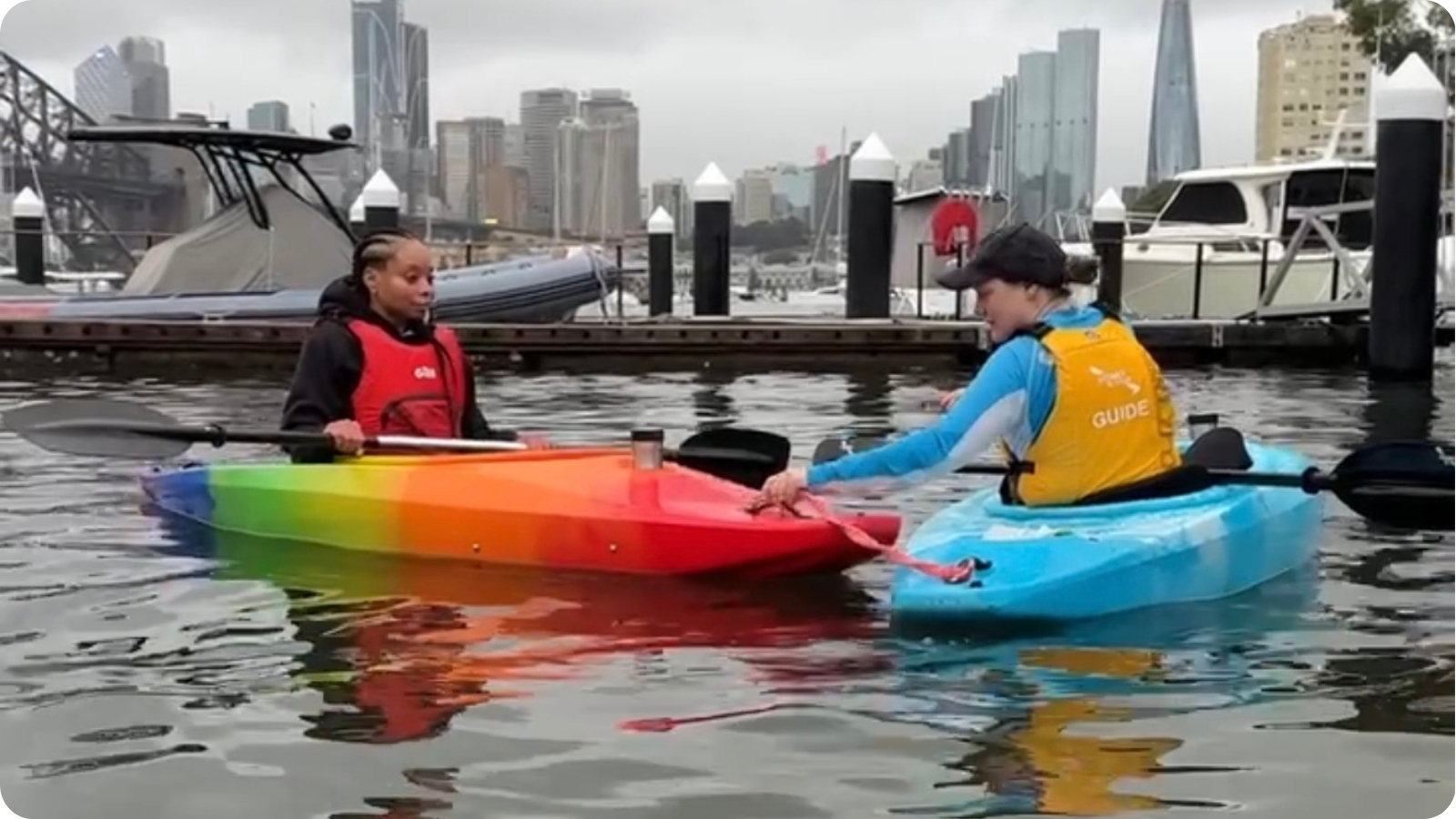
How we can help
No two paddlers are the same, which is why we'd always rather have a conversation than make assumptions. If you have a disability, injury, medical condition, allergy or simply have questions about whether a tour is right for you, please get in touch. The more we understand your needs, the better we can tailor your experience.
You can also download our full Accessibility Guide (PDF), which covers what to expect, how to prepare and everything in this section in one document you can read before your visit.
Non-English speaking
Our casual, bi-lingual guides accompany non-English speaking groups so no one misses out on Sydney's stories.

Dietary requirements
Whether it's full cream, skim, soy, almond or rice, our made-to-order barista coffee and teas can meet all dietary and allergy requirements. We even have a gluten free birthday cake that everyone will enjoy. If you have an allergy or medical dietary requirement, let us know before your tour so we can prepare safely.

Expectant Mums
Paddling for two? We have life-jackets to fit all sizes and will gladly attach a towline if you need a break. We also offer hot chocolate if you're not drinking coffee.

Reduced Mobility
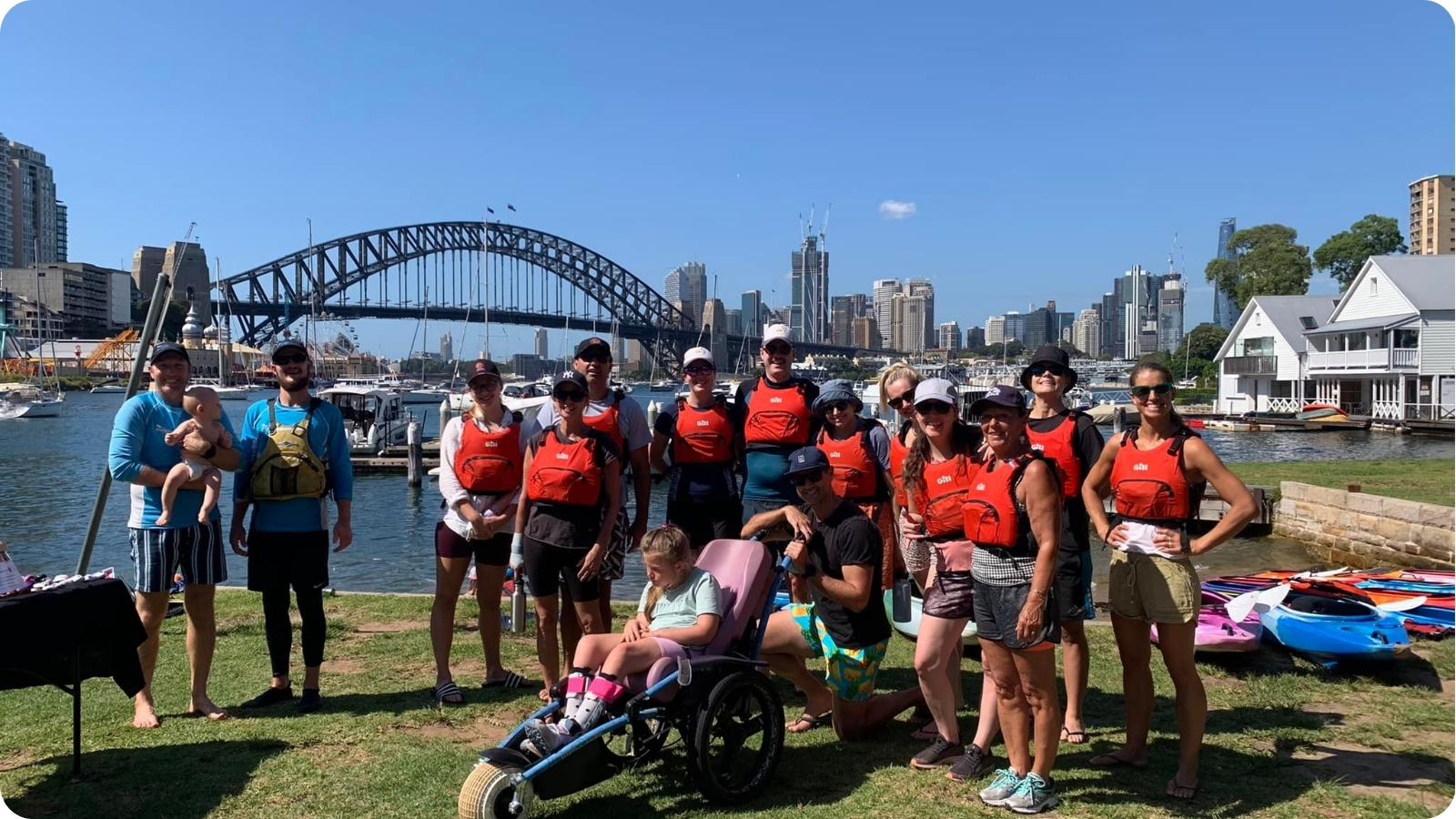
With an additional guide scheduled, we can assist with lifting you into your kayak and stay nearby and on-hand on the water. Our custom twin-outrigger kayak is also available for paddlers who would like extra stability.

Deaf or Hard of Hearing
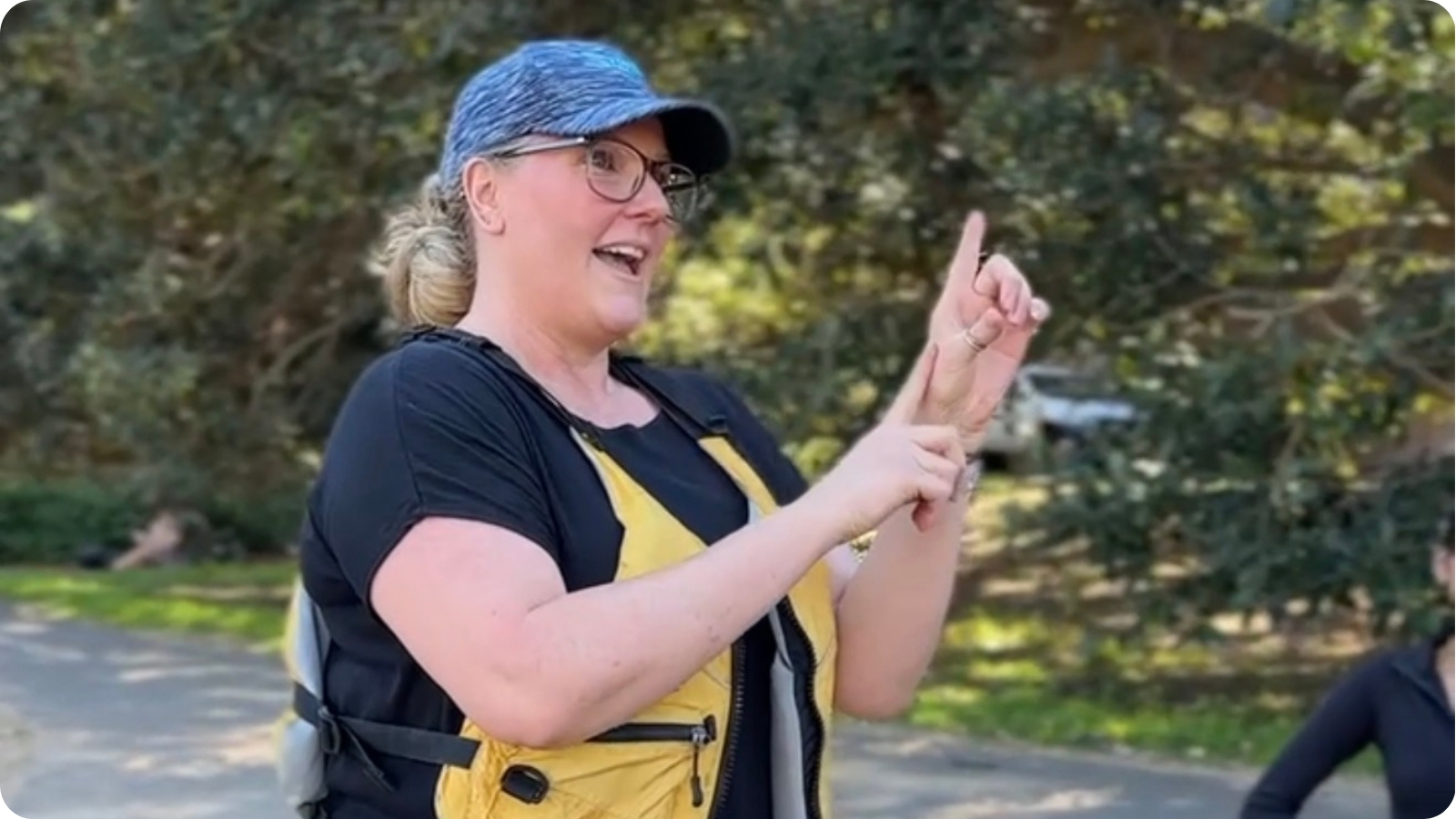
We slow down, add pauses in the briefing and enable lip reading. Basic hand signals are used throughout the tour by our guides, and with notice we can arrange our Auslan Guide to join the tour and interpret throughout the experience.

Injuries
Whether it's extra padding on the seat or a quick tow from your guide, we have a few things we can offer to make kayaking more comfortable while you recover.

Communication and planning
Written safety information in plain English, communication cards, social stories and familiarisation information are all available on request. If extra time before your tour would help, just ask.

Assistance dogs
Assistance dogs are always welcome, at the Eco Hub and on the water in our outrigger kayak. We keep a dog life vest, fresh water, blankets and a quiet resting space ready.
Don't see your situation mentioned?
Please don't assume the answer is no. Every person's circumstances are different, and we're always happy to have a conversation. If there's a safe way for us to adapt your experience, we'll do everything we can to make it happen.
Some of our favourite mornings on Sydney Harbour have started with a phone call that began with, "I'm not sure if this is possible..." More often than not, we've found a way. We'd love to hear from you.

The equipment behind the experience
We didn't buy our accessibility equipment all at once. We bought each piece because someone needed it, and we wanted to be ready the next time someone did too.

The Twin-Outrigger Adaptive Kayak
Our most significant investment. The custom twin-outrigger kayak provides exceptional stability for wheelchair users, paddlers with limited mobility or balance challenges, and anyone who simply wants the confidence of knowing the kayak will not tip. It launches from the beach, so there is no dock height to negotiate, and it can be towed by a guide for the full duration of the tour if you prefer not to paddle. Suitable for paddlers up to approximately 120kg.
Transfer Support Sling and Non-Slip Matting
Getting from a wheelchair into a kayak on a sandy beach is something most people have never had to think about. We have. The transfer sling and non-slip matting make the transition from wheelchair to kayak seat safer and more comfortable. Our guides are experienced in assisting with transfers and take as much time as needed.

Tow Ropes on Every Guide Kayak
Every single guide kayak at Sydney By Kayak is fitted with a tow rope. This is standard equipment across all our tours, not just the adaptive kayak. If you become tired, if conditions change or if you simply want to stop paddling and enjoy the view, your guide will tow you. You do not need to ask. You just need to say the word.

Paddle Grips
Non-slip sponge paddle grip covers for paddlers who need extra grip due to limited hand strength, nerve damage, arthritis, prosthetic hands or simply cold fingers on a chilly Sydney morning. Small and simple. Borrowed whenever they're needed.

Prescription Glasses Straps and Spare Sunglasses
We keep neoprene glasses straps at the boat ramp so prescription glasses stay secure on the water. We also carry spare sunglasses for paddlers whose prescription glasses are not suited to the brightness of a Sydney Harbour sunrise.

LED Magnifying Glass
Available for paddlers with low vision who would like assistance reading printed information, including waivers, maps and brochures. The built-in LED light helps during our early morning tours.

Extra Large Adjustable Dog Life Vest
For assistance dogs who travel in the outrigger kayak on the water. Because your dog's safety matters as much as yours.

Hidden Disabilities Sunflower Lanyards
We keep Sunflower lanyards at the Eco Hub and in our kayak vans for any guest who would like one. No cost. No process. Just ask.

Comfort for Assistance Dogs
Fresh water is always available in a Huskee bowl on the deck of the Eco Hub, and a quiet space with blankets and towels is set up for assistance dogs to rest. We can also direct you to the nearest outdoor area for toilet breaks.
Designed for everyone from the beginning
When we started planning the SBK Eco Hub in 2024, we made a decision early on: accessibility would be designed in from the start, not added on afterwards.
Ben, who leads our infrastructure and operations, took on much of the physical work himself. The outdoor deck was built flush with Blues Point Road, so visitors in wheelchairs can move seamlessly from the footpath into The Speakeasy coffee window and through the Eco Hub without a single step or ramp. The side pathway along the building to the coffee window is level with the street.
Inside, Ben rebuilt the bathroom from the ground up as a single large accessible space. He also repositioned a doorway during construction to create a clear, straight pathway from our Reshaping Waste workshop through to the bathroom and out to the deck.
The reception area is designed with space for wheelchair users to move freely. Sunflower lanyards are available at the counter. A quiet space with water, blankets and towels for assistance dogs is always set up and ready.
Most visitors never notice any of this. They just notice that the space feels easy. That's exactly what Ben was aiming for.
If you would like to visit the Eco Hub before your tour to get a sense of the space, you are always welcome. Just let us know you are coming.

Not every disability is visible
Some needs are immediately obvious. Many are not. Both are completely welcome here.
Many of our visitors paddle with conditions that others cannot see. ADHD, autism, PTSD, anxiety, chronic fatigue, chronic pain, hearing loss, sensory processing differences, depression and many others. Some people need a little more time. Some prefer to receive instructions in writing. Some find groups difficult. Some need to know exactly what will happen before they feel safe enough to try.
All of this is completely fine. And none of it requires explanation.
If you would like to speak with us before booking, we are always happy to have that conversation. If you would like a social story describing exactly what the morning will look like before you arrive, we can prepare one. If you would prefer a quieter tour time or a smaller group, we can discuss that too.
We are members of the Hidden Disabilities Sunflower program, which helps us recognise and support visitors with non-visible disabilities without requiring explanation. If you or someone in your group wears a Sunflower lanyard, our team will know to offer additional time, patience and a quieter approach. You do not need to tell us why. The lanyard says everything we need to know.
We keep Sunflower lanyards at the Eco Hub and in our vans. If you would like one, please just ask. There is no cost and no process.
Frequently asked accessibility questions
Arriving
Accessible toilets
Meeting your guide
The safety briefing
Getting into the kayak
On the water
Your companions
After the tour
We are always learning
We won't pretend we have thought of everything. Every paddler who has trusted us with their experience has taught us something. Every piece of equipment we have bought came from a real conversation with a real person who helped us understand what they needed. Here is what we are currently working on.

Website accessibility
We are undertaking a formal audit of our website and booking system for screen reader compatibility, image alt text and accessible form labelling. We want the digital experience to be as accessible as the on-water experience.

Accessibility Guide PDF
Done. Our detailed guide covering the equipment, the beach launch process step by step, the Eco Hub and how to prepare is now available to download from this page.

Visual strobe fire alarm
We are investigating whether our current fire alarm system at the Eco Hub includes visual strobe capability for deaf and hard-of-hearing visitors. If it does not, we are committed to upgrading it.

Regular accessible tour slots
Most dedicated accessible experiences are currently arranged on request. We are working towards listing regular accessible tour times directly in our booking system.

Ongoing learning
We are committed to continuing to learn, including about First Nations cultural perspectives on disability and inclusion, adaptive paddling techniques and mental health first aid for guides.
If there is something we have not considered, something that would make your experience safer or more comfortable, or something on this list that we should be doing faster, please tell us. That is how Sydney By Kayak has always evolved.
Our full Accessibility Guide (PDF) is available to download.
Our accreditations and certifications
Paddle Australia Accredited
All guides hold current Paddle Australia accreditation, including on-water support and adaptive guiding practices.
Quality Tourism Framework Accessible Tourism Program
We have completed the QTF Accessible Tourism Program, reflecting our formal commitment to welcoming visitors of all abilities.
Ecotourism Australia ECO Certified
Accessibility is a core part of how we meet and maintain our Eco Certified standard.
Hidden Disabilities Sunflower Member
Members of the Hidden Disabilities Sunflower program since 2026. Lanyards available at the Eco Hub.
A note from Laura
"If you are wondering whether this experience is possible for you, please reach out. Chances are I have had a very similar conversation before. And if I haven't, we will work it out together.
Sydney Harbour has given me so much over the past thirteen years. Every morning on the water reminds me why I started this business. I believe everyone deserves the opportunity to experience it."

Every year someone finishes a tour and says, "I never thought I'd be able to do that."
We hope the next person who says it is you.
Laura Stone
Founder
Sydney By Kayak
Frequently Asked Questions
View the entire FAQCan I kayak if I use a wheelchair?
Can someone tow me if I cannot paddle?
Can I paddle with one arm?
Can my assistance dog come on the tour?
Can my support worker or carer paddle too?
What if I become tired during the tour?
Is there an accessible toilet?
Do I need upper body strength?
What if I am anxious about being on the water?
Can children with additional needs join a tour?
How do I know if this tour is suitable for me?